
Royal Air Force Uxbridge was headquarters of No.11 (Fighter) Group throughout the Second World War.
Battle of Britain Bunker and the Polish Air Force
In this role, the Battle of Britain Bunker commanded seven sector airfields in south-east England and their fighter squadrons, including No.303 (Kościuszko) Squadron during the Battle of Britain. No.303 was the second Polish Air Force fighter squadron to form in the United Kingdom and the first within No.11 Group. From that date, throughout most of the Second World War, No.11 Group would include at least one Polish Air Force fighter squadron.
No.11 Group controlled its squadrons through the underground operations room, now known as the Battle of Britain Bunker. The secret heart of the UK's air defence system, this operations room incorporated the new Polish squadrons into its displays of information. This meant the new squadrons could be scrambled and directed in the same way as any British fighter squadron.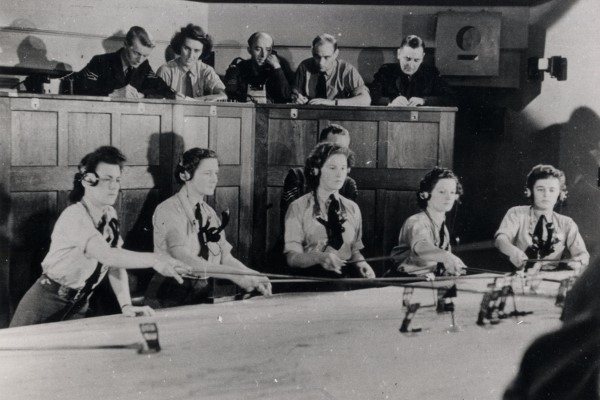
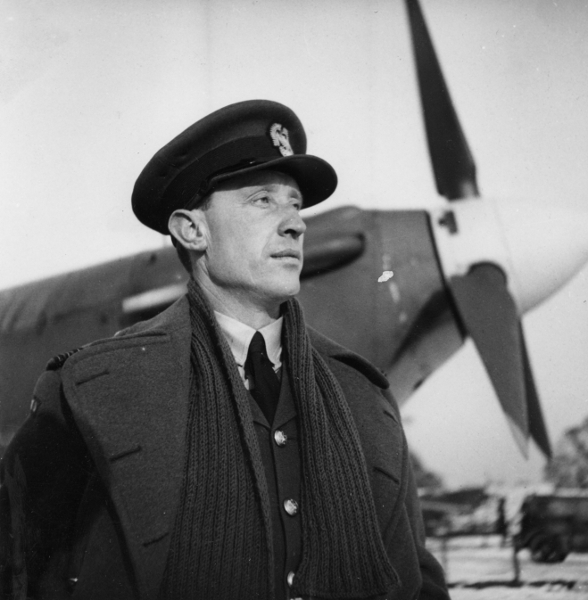
Towards the end of 1940, more Polish fighter squadrons became operational and over the coming years moved in and out of No.11 Group regularly. A Polish Liaison Officer was stationed at Uxbridge to assist with the growing numbers of Polish personnel that No.11 Group was responsible for. The first of these liaison officers, Witold Urbanowicz, arrived on 20 October 1940. Urbanowicz had previously been a flight and then squadron commander with No.303 Squadron and had become the most successful Polish pilot of the Battle of Britain, credited by Fighter Command with 15 enemy aircraft destroyed.
If you are a relative or descendant of a member of the Polish Air Force and you believe that they may have been stationed at RAF Uxbridge, please email us at bunker@hillingdon.gov.uk.
Image descriptions
- Witold Urbanowicz, the most successful Polish pilot of the Battle of Britain with 15 kills. Urbanowicz became the first Polish Liaison Officer at headquarters No.11 Group.
- The No.11 (Fighter) Group Operations Room.