

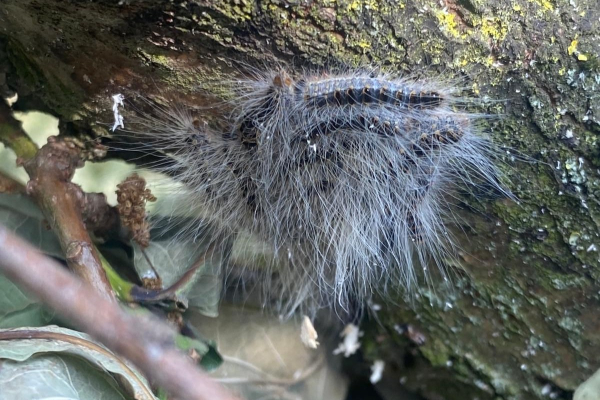
Oak Processionary Moth (OPM) is an insect whose caterpillars feed on oak trees. It is found across much of London, including Hillingdon.
The caterpillars have tiny hairs that can cause skin rashes, eye irritation and breathing difficulties in people and animals.
Caterpillars are most active from late spring to early summer. However their hairs can remain a hazard throughout the year due to the presence of old nests.
How to Identify OPM
You may have OPM on an oak tree if you notice:
- caterpillars with dark heads and grey bodies covered in long white hairs
- caterpillars moving in distinctive nose-to-tail processions
- white silken nests on oak tree trunks or branches, which become discoloured over time
- groups of caterpillars feeding on oak leaves.
Risk to people and pets
The caterpillars develop thousands of tiny hairs containing an irritant protein. Contact with the caterpillars, their nests or detached hairs can cause:
- itchy skin rashes
- eye irritation
- sore throats
- breathing difficulties in some people.
- reactions in dogs and other animals.
What you should do
If you see caterpillars or nests that you suspect may be OPM:
- do not touch them
- do not attempt to remove nests yourself
- keep children and pets away from the area
- report sightings to the Forestry Commission through TreeAlert, when reporting, include:
- a photograph if it is safe to obtain
- the location of the tree
- information about the size and extent of the infestation.
What the council does
When OPM is found on council-managed land and is considered a significant risk to residents, the council may arrange inspections and treatment by qualified contractors.
As OPM is widespread across much of London, works are prioritised based on public safety and how frequently a site is used.
Advice for owners of oak trees
Owners and managers of oak trees should:
- regularly inspect trees between spring and late summer
- avoid disturbing nests or caterpillars
- seek specialist advice if OPM is found
- be aware that movement of larger oak trees is subject to Forestry Commission restrictions within OPM management zones.
For the latest guidance on OPM, visit the Forestry Commission guidance on GOV.UK.